The stand Sri Lanka should take in Geneva

17 March 2019

MEDIA RELEASE

The government has announced that they will co-sponsor yet another resolution against Sri Lanka in the UN Human Rights Council. Resolution 30/1, the first such co-sponsored resolution in October 2015 committed the government to among other things, setting up a hybrid war crimes court with the participation of foreign judges, prosecutors and investigators and to removing by administrative means, individuals in the armed forces suspected of human rights violations even if there is insufficient evidence to charge them in courts. By co-sponsoring Resolution 30/1, the Sri Lankan government officially accepted Report No: 30/61 dated 28 September 2015 prepared by the Office of the High Commissioner on Human Rights (OHCHR), which directly accused the Sri Lankan armed forces of many crimes including torture, enforced disappearances, deliberate targeting of civilians and the denial of humanitarian assistance to civilians.

In partial fulfillment of the numerous pledges given in Resolution 30/1, the government forced through Parliament the Office of Missing Persons Act after a farcical debate of less than 40 minutes in August 2016. The Office of Missing Persons can issue summons, examine witnesses, and hold hearings and is actually a tribunal in all but name. Its officers can search any police station, prison or military installation at any time without a warrant and seize any document or object they require. Government bodies at all levels including the armed forces and intelligence services are mandatorily required to render fullest assistance to the OMP even in contravention of the Official Secrets Act.

In March 2018, acting against the repeated requests of the Maha Sangha, the government passed the Prevention of Enforced Disappearances Act No: 5 of 2018 to incorporate into local law, the provisions of the International Convention against Enforced Disappearances. This enables an alleged enforced disappearance in Sri Lanka to be investigated and prosecuted in a foreign country as if it was an offence committed in that country. The country that arrests a Sri Lankan citizen on such grounds, has the option of handing that individual over to the International Criminal Court. Furthermore, foreign governments can request the extradition of persons suspected of having committed enforced disappearances in Sri Lanka to stand trial in their countries.

In August 2018, the government passed amendments to the Mutual Assistance in Criminal Matters Act No: 25 of 2002 to widen its applicability to a larger number of countries and also to international organisations such as the International Criminal Court. This law relates to facilitating cooperation between Sri Lanka and foreign countries and organisations in locating witnesses or suspects, issuing summons and other documents on such persons, the obtaining of evidence, the execution of search and seizure requests etcetera. The UN Human Rights Commissioner in her report on Sri Lanka to the current session of the UNHRC, has called on member states of the UNHRC to investigate and prosecute those suspected of war crimes in Sri Lanka under the principle of universal jurisdiction. The direct connection between this request and the new laws passed by Sri Lanka, is self-evident.

The contents of the UN Human Rights Commissioner’s latest report in addition to similar reports in previous years, gives rise to the question whether Sri Lanka is any longer a sovereign nation. From Geneva, she has stressed the need for the Sri Lankan government to devolve of political authority. She has expressed her displeasure at the appointment of Major General Shavendra Silva as the Chief of Staff of the Sri Lanka Army. She has stated that the panel of experts report tabled in the Constitutional Assembly by the Prime Minister could be the basis for a new constitution for Sri Lanka. With such supervision of our affairs from Geneva, why do we need an elected government?

Resolution 30/1 which sought to betray our armed forces and wartime leaders to interested foreign parties was co-sponsored by the yahapalana government at a time when they were expecting large inflows of foreign aid. Quisling regimes established through foreign intervention in certain other countries were in fact rewarded with increased aid in exchange for handing over the deposed political and military leaders to interested foreign powers in order to ensure that the nationalist forces in those countries never rise up again. I am quite convinced that the open and unashamed treachery in co-sponsoring Resolution 30/1 was due to such expectations on the part of this government.

This year, the British government is driving the process against Sri Lanka in the UNHRC because the USA has left the UNHRC calling that body ‘a cesspool of political bias’. Governments change in all countries and with it attitudes and policies also change. The international order that saw the passage of Resolution 30/1 is changing, but because we still have a government that identifies with the old world order, Sri Lanka has not been able to reap the benefits of the changes that have taken place in the world since 2016.

In Britain Lord Naseby has been trying to persuade the British government to drop the campaign against Sri Lanka in the UNHRC. He has in his speeches in the House of Lords explained how the 2011 Darusman report compiled by an unofficial committee appointed by the then UN Secretary General Ban Ki Moon had arbitrarily plucked the figure of 40,000 civilian deaths out of thin air. He has recounted how the then British Defence Attaché in Sri Lanka Lieutenant Colonel Anton Gash, had told him in January 2009 that he was surprised at the ‘controlled discipline’ of the Sri Lankan army and the solicitous manner in which they looked after the civilians who escaped from LTTE captivity. Lord Naseby has obtained from the British Foreign and Commonwealth Office copies of the dispatches filed by Lt Colonel Anton Gash which despite being heavily redacted, prove that it was never a policy of the Sri Lankan Government to kill civilians.

Furthermore, five renowned international experts in the law of armed conflict namely, Sir Desmond de Silva QC, Professor David Crane, Sir Geoffrey Nice QC, Rodney Dixon QC, and Professor Michael Newton have examined the allegations against Sri Lanka and provided written opinions to the effect that no violation of the law of armed conflict had taken place during the final stages of the war. Major General John Holmes, a highly decorated British Special Forces Commander has done a technical evaluation mainly of the allegations of the indiscriminate use of artillery during the final stages of the war and stated in writing his conclusion that there is no indication that the Sri Lanka Army deliberately or disproportionally targeted the civilian population. He has criticized the interpretation of satellite imagery in the Darusman report of 2011 on which these allegations are largely founded.

Most of these experts who have expressed views in favour of Sri Lanka are British citizens, yet the Sri Lankan government has not engaged with the British government to have the passage of these resolutions stopped. There is now a government delegation in Geneva with representatives of both the President and the UNP government attending the 40th Session of the UNHRC. Speaking of the new draft resolution that is now on the table, Minister Lashman Kiriella said in Parliament that Sri Lanka has been praised for the progress made and that there was nothing wrong in co-sponsoring that resolution. Indeed, there are some words of praise in the draft resolution, but that is for things like the treachery committed by this government in readily cooperating with their foreign overlords and passing the new laws that we mentioned earlier. What is seen in a positive light by the foreign masters of this government translates directly into a betrayal of Sri Lanka.

In reply to a question that I posed in Parliament, the minister of foreign affairs said that the government does not agree to everything in the UN Human Rights Commissioner’s latest report on Sri Lanka to the UNHRC and as an example of something that the government does not agree to, he mentioned an error in that report relating to the amount of land in the North released for civilian use. Disagreement on such trivialities means nothing. What the people of this country would like to see is a public announcement by the government which is also officially communicated to the UN Human Rights Commissioner and members of the UNHCR stating:

a) That Sri Lanka will no longer co-sponsor resolutions against itself in the UNHRC.

b) That Sri Lanka does not accept the allegations made in OHCHR Report No: 30/61 of 28 September 2015.

c) That hybrid war crimes courts with foreign judges and prosecutors will never be set up in Sri Lanka.

d) That Acts No: 14 of 2016, No: 5 of 2018 and No: 24 of 2018 which are highly detrimental to Sri Lanka’s sovereignty and the fundamental rights of its citizens, will be repealed and replaced with legislation more in keeping with our national interest.

All members of the delegation representing the government in Geneva should clearly understand that anything short of the above will effectively, be a betrayal of the people of Sri Lanka.

Mahinda Rajapaksa
Leader of the Opposition
English Geneva 17 March 2019

A draft constitution to destroy Sri Lanka

MEDIA RELEASE

A draft constitution to destroy Sri Lanka
At the recent meeting of the Constitutional Assembly, the Prime Minister tabled a 187 page report prepared in the form of a draft constitution. Thereafter the PM has been going around the country claiming that there is no constitution or even the draft of a constitution. At the same time we also hear the Prime Minister and other members of the UNP stating that under the proposed new constitution, Sri Lanka will remain an ‘indivisible’ and ‘united’ country and that Buddhism will not be denied the special place it has hitherto had. The people should be mindful about these moves being made to promote a new constitution in the midst of multiple crises including an unprecedented pest invasion in the agricultural sector and a looming debt crisis.

When the present rulers came into power in 2015, the only constitutional agenda they had was to abolish the executive presidency and to change the system of elections so as to ensure stable parliamentary governments. The draft constitution does have provisions to abolish the executive presidency, which we will not oppose. However, the new system of elections that has been proposed is another ‘pure proportional representation’ system like the systems that were introduced at the local government and provincial council levels in 2017 with disastrous results. Even those who voted for that elections system in 2017 now want it scrapped. If the system of elections is to be changed so as to ensure stable governments, what should be introduced is the hybrid 70%-30% ‘first past the post/proportional representation’ system proposed by the Parliamentary Select Committee headed by Mr. Dinesh Gunawardene after years of careful study from 2002 to 2007 under both UNP and UPFA governments.

The draft constitution seeks to weaken Parliament and immeasurably strengthen the provincial legislatures. If Parliament is to enact a law on a matter on the provincial councils list without the express agreement of each and every provincial council, that law would have to be passed with a two thirds majority by Parliament and also approved at a referendum. Even a law on a provincial council subject passed in this manner can be vitiated by a statute passed by a provincial council with a simple majority (Clause 132 in the draft constitution). Such limitations imposed on the legislative power of Parliament is the turning point at which the unitary state becomes a federal state. We are resolutely opposed to such a change. Parliament can make laws on matters coming under the concurrent list only with the approval of all provincial councils (Clause 134). Thus the discretion that Parliament has under the present Constitution to decide whether to consult the provincial councils or not, is to be done away with. The legislative power of Parliament is to be further weakened by giving the proposed constitutional court the power to review laws that have been passed by Parliament (Clauses 182-c and 185).

Even though the draft constitution refers to a provincial council list, a concurrent list and a reserved list it has not been stated anywhere whether these lists are the same as those in the present Constitution or not. Although reams of useless information are being tabled in the Constitutional Assembly, some of the most essential information such as the content of these lists, is missing. The federalist tilt in the proposed draft becomes obvious when the Governor – the main representative of the central government in the provinces is placed under the chief minister. The executive power of the province is to be vested in the Chief Minister and not the Governor in complete contradiction to the provisions of the present Constitution (Clause 242).

The police force will be broken up into a national police force and nine separate provincial police forces each with its own Police Commission. The national police force is to have jurisdiction only over a limited number of specified offences, such as offences against the state, election offences and currency related offences etc. The provincial police will have effective charge of all day to day police work pertaining to crime, fraud, narcotics, traffic, public order etc. (Clauses 254, 259, and 284). This country can be destroyed simply by breaking up the police force into 10 separate police forces in the manner proposed. This is why no government in the past 30 years, broke up the police force regardless of the provisions in the 13thAmendment.
Under the new constitutional proposals, the central government will have control over state land used for subjects pertaining to the national list or the concurrent list at the commencement of the Constitution. The provincial councils are to have authority over all other state land within their borders. If the central government requires state land in a province for any purpose, they may address a request to the provincial administration and if the latter does not comply, the dispute will be referred for arbitration to a three member tribunal. If the central government is not satisfied with the arbitration ruling, they can petition the constitutional court. The central government cannot unilaterally acquire state land in a province even for a national security related purpose as the provincial council can petition the constitutional court against such an acquisition (Clauses 302, 307 and 308).

Under the proposed new constitution the declaration of a state of emergency by the central government is to be made subject to judicial review by the constitutional court. A state of emergency may continue in excess of three months or a period of more than 90 days within a 180 day period only if it is approved by two-thirds of the Members of Parliament (Clauses 290-5, 291-d and 292). What this means in practice is that the central government will not be able to respond adequately to an emergency. The declaration of an emergency is an executive action and the judiciary is not competent to deal with such matters. In any case, if a stay order can be obtained against a declaration of emergency, there will be little point in declaring a state of emergency. There are many other issues as well such as the provision to merge the northern and eastern provinces (Clause 237-3) and the creation of a constitutional court to exercise the constitutional jurisdiction currently exercised by the Supreme Court (Clauses 181 to 191).

The special oath against separatism in the present Seventh Schedule introduced by the 6th Amendment of 1983 is not to be seen in the draft constitution. It should be noted that what has been mentioned here are only a few of the provisions in the proposed draft constitution that we are unable to agree to. A certain pattern can be discerned here. The Parliament and the central government is to be weakened and the provincial councils strengthened immeasurably, the governors are to be made subordinate to the chief ministers, separate armed police forces are to be established for each province and the question of subjects allocated to the provinces and the central government is to be kept open to be filled in later. The declaration of a state of emergency when necessary is also to be made virtually impossible. Where all this is leading should be obvious to everybody.

The UNP, TNA and JVP have forfeited the trust of the people due to the manner in which they practiced dissimulation and deception in the law making process. The way the 19th Amendment was passed with dummy provisions inserted solely to mislead the public and the Supreme Court, the way they changed the local government and provincial councils election laws through the back door by introducing committee stage amendments to Bills gazetted for completely different purposes, and the manner in which the Office of Missing Persons Act was bulldozed through in August 2016 without a debate or a proper vote in the midst of a melee in Parliament are all cases in point.

There is no limit to the perfidy of this government. After putting forward the draft constitution, members of the government have been speaking only of two issues – the place accorded to Buddhism and the term ‘unitary’. In the draft that has been circulated to all MPs, there are several alternative formulations proposed for the provisions relating to the place accorded to Buddhism and the question of the unitary state. The separatists and federalists have no interest in names or words. So long as they get what they want, they do not care by what name it is called. Their real target is not the status of Buddhism or the word ‘unitary’. There is a very real possibility that they will back down from the alternative formulations they have proposed with regard to the status of Buddhism and the term ‘unitary’ as a bargaining strategy in order to win the real federalist demands which is the essence of the new draft constitution.

The venerable Maha Sangha in particular should be mindful of the possibility of such manoeuvres. Even though the present Constitution accords the foremost place to Buddhism, we have seen the manner in which the present government persecuted the Maha Sangha. So there is a very real possibility that this country will be turned into a federal state while still retaining the unitary label. The majority of the Tamil people in this country permanently reside outside the northern and eastern provinces. The vast majority of the Muslims reside permanently outside the eastern province. Such realities should be kept in mind when promulgating a new constitution.

Opposing the draft constitution put forward by the present government does not mean that we as the opposition are slamming the door shut on constitutional reform. We acknowledge that extensive reform of the present constitution is necessary. The 19th Amendment alone has created a great deal of confusion that needs to be put right. Though we reject the separatist/federalist aspirations of some political parties, we acknowledge that local communities need to be empowered to look after their own affairs within a certain national framework. We will be putting forward our own proposals at the next national election to seek a direct mandate from the people for constitutional reform. I call upon the people and all political parties to support our endeavor because that will be the only real opportunity available to effect constitutional reform in this country.

Mahinda Rajapaksa
Leader of the Opposition, 23 January 2019

English 23 January 2019

Thai Pongal Day message from the Leader of the Opposition

On this auspicious Thai Pongal day I wish to convey my greetings towards a prosperous and peaceful future to everyone celebrating. Thai Pongal is not only a day to celebrate the bounty of harvest, it is also a day for all to be grateful for a rich and fulfilling life. This has been tradition and the message that’s conveyed throughout the world.

Let’s celebrate this Thai Pongal day beyond religious differences with our relatives and neighbours in peace and love.

As per tradition a new journey begins when Thai (Tamil New Year) is born. And through this, the Hindu people believe that they would receive good health and wealth without suffering. Thus let us look to this New Year to recover from natural disasters we have recently experienced and come together to rebuild as one.

In my long political journey, not only as a Member of Parliament, Minister, Prime Minister and President of the country but also as a Sri Lankan citizen, I have always prioritized my duty towards the country’s progress with no discrimination.

Moreover, I pray as the Opposition Leader that we are all able to agree on a political solution which will allow all our people to live a united and peaceful life in our motherland.

Mahinda Rajapaksa
Leader of the Opposition – January 15, 2019
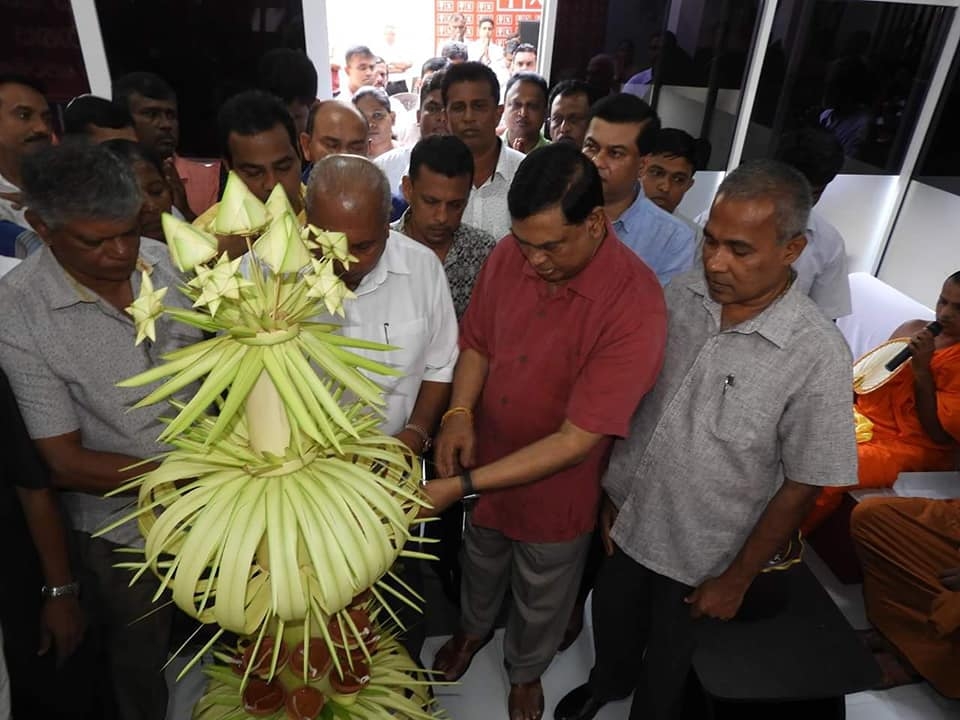
Thai Pongal day English 2019

Four years of misrule

MEDIA RELEASE

Four years of misrule and the fate of future generations in this country

Sri Lanka faces three major dangers as we complete four years since the change of government on 9 January 2015. The first among them is the danger of the economy collapsing at any moment. In the past four years, the UNP led government has borrowed the equivalent of 50% of the total national debt that was outstanding as at the end of December 2014 from the loans taken in the six decades after gaining independence in February 1948. Even though the UNP claims to be taking loans to repay the loans taken by my government, if debt was being incurred only to pay off previous debts, the total outstanding debt in the country cannot increase. What has happened however is that while the total outstanding debt as at the end of 2014 has remained as it is, a sum equivalent to more than 50% of that total has been added on to the national debt in the past four years.

When we ruled the country between 2006 and 2014, there was a major war in the country in the first few years. We had to face a world food crisis in the middle of that in 2007. Between 2008 and 2009 came the worst global recession since the 1930s. Between 2006 and 2014, crude oil prices went up continuously in an unprecedented manner touching 140 USD per barrel. Despite all those challenges, in the entire nine years between 2006 and 2014, the Rupee depreciated by only Rs. 28 to the US Dollar. However over the past four years, without any of the crises that we had to face, the Rupee has depreciated by Rs. 53 to the US Dollar. The average growth rate of 7.4% that we maintained has plummetted to below 3%. Even though the President realised the danger of what was happening and tried to hold a general election and hand the running of the country back to us, that did not succeed. We are now in a situation where no one knows what will happen to the economy in the comming weeks and months.

The next danger we face is that of the entire governmental mechanism breaking down due to the 19th Amendment. Under the provisions of the 19th Amendment, Parliament cannot be dissolved under any circumstances, even in the event of a government repeatedly losing votes on the budget, the statement of government policy or no confidence motions. A parliament is a gathering of individuals and organisations with their own views, needs and ambitions. Over the centuries, the parliamentary system evolved certain mechanisms to retain these individuals and organisations within a framework that will enable a government to function in the country. If differences emerge with a parliamentary ruling party to the extent that it disrupts governance, the power to call a general election and allow the people to elect a new government was one of the corner stones of the parliamentary system. Since it is now no longer possible to go before the people when necessary, the capacity of the governing party to retain its MPs and colation partners within a certain framework has been seriously impaired.

The parliamentary dissolutions that took place in this country in 1952, 1959, 1964 and 2001 were due to turbulence within the ruling parties and coalitions of the time. Before long, it will become clear to everyone how inimical it is to a country to block the ability to call a general election when necessary. The main criticism made against the 1978 Constitution from the very beginning was that in the event where the parliamentary majority goes to a political party other than the party of the President, the system could face a situation of gridlock. The precedent that was created in this regard after the general elections of 1994 and 2001 was that in the event where the President calls a general election which is won by a different political party, the President would submit to the people’s mandate, take a step back and hand over the running of the country completely to the Prime Minister and the Cabinet appointed from within Parliament. That however, is no longer possible today.

Even though the President is now prohibited from calling a general election to seek the people’s mandate, the 19th Amendment itself has placed the responsibility of forming governments with the MPs in Parliament and taking the country forward entirely on the same President. The President continues to be the head of government and the head of the Cabinet. The President will also be responsible for everything done by such a government. The President now cannot call elections to test public opinion and take a back seat if the people’s mandate goes against him. After the 2018 local government election, the whole country knows that the UNP does not have the people’s mandate and that they have been avoiding holding elections for that very reason. In such circumstances, it will be impossible for the President to hand over the running of the country to the UNP and take a back seat. Because of the irrational provisions of the 19th Amendment, there is a clear danger of a breakdown in the governmental mechanism of the country.

The third danger facing the country is the proposed new draft constitution which is to be presented to the Constitutional Assembly. Through this draft constitution, the government seeks to divide the country into nine semi-independent federal units. The powers wielded by the central government today, are to be devolved to the provinces. Each province is to have a separate police force. Provisions have been introduced to weaken the central Parliament and the legal framework in such a manner as to make it impossible for the central government to respond adequately to an emergency in order to safeguard the peace and integrity of the country. This draft constitution has been prepared by the same persons who drafted the completely confused 19th Amendment.

The same parties that drafted this proposed new constitution introduced a new elections system for the local government bodies and provincial councils in 2017. Today, the every people who enthusiastically voted for that new elections system say that no election in the future should be held according to that new system. If the new constitution drafted by the same people is passed, Sri Lanka as we know it, will cease to exist. We now hear that attempts are being made to buy MPs to get this new constitution passed. Thus, Sri Lanka now is confronted with three deadly dangers. In these circumstances, I wish to draw the attention of the people to the fact that the only political force capable of preventing these dangers from becoming a reality is the opposition alliance that I lead, which has an established track record of having overcome even challenges deemed impossible, in the service of this country.

Mahinda Rajapaksa
Leader of the Opposition – 9 January 2019
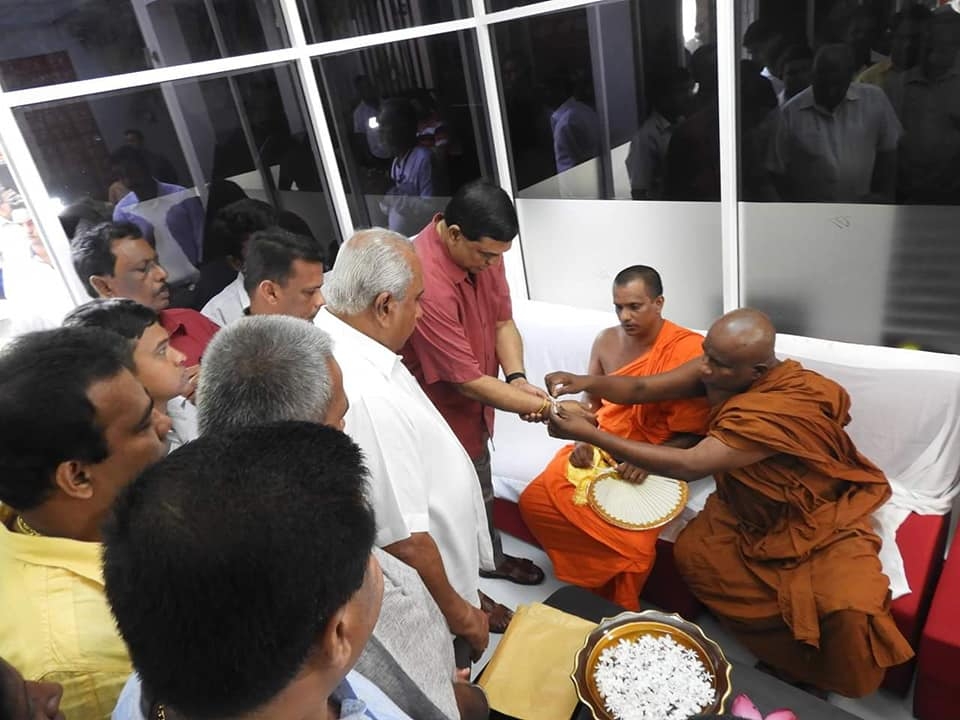
English 9 January 2019

I did not meet anyone

මම කාවවත් හමු වුණේ නෑ..  පොහොට්ටුවේ ජනාධිපති අපේක්ෂකයා තෝරන්නේ මහින්ද
– බැසිල් රාජපක්ෂ –
ශ‍්‍රී ලංකා පොදුජන පෙරමුණේ සහ ශ‍්‍රී ලංකා නිදහස් පක්ෂයේ ජනාධිපතිවරණ පොදු අපේක්ෂකයා ලෙස මෛත‍්‍රීපාල සිරිසේන මහතා නම් කිරීම පිළිබ`ද සාකච්ඡුා කිරීම ස`දහා ඔහුගේ නියෝජිතයන් වන පාර්ලිමේන්තු මන්ත‍්‍රී මලිත් ජයතිලක මහතා සහ ජනාධිපති උපදේශක නීතිඥ ශිරාල් ලක්තිලක යන මහතා තමා හමු වූ බවට පල වන වාර්තා සම්පූර්ණයෙන්ම අසත්‍ය බව බැසිල් රාජපක්ෂ මහතා අවධාරණය කරයි.
මේ පිළිබ`දව වැඩිදුරටත් කරුණු පැහැදිලි කළ බැසිල් රාජපක්ෂ මහතා…….
ශිරාල් ලක්තිලක හෝ මලිත් ජයතිලක මෑතකදී මට නිකමටවත් මුණගැහිලා නෑ…. අඩුම ගානේ මගුල් ගෙදරකදී, දානෙ ගෙදරකදිවත් මෑතකදි ඔවුන් මට හමුවෙලා නෑ. අනික මෛත‍්‍රීපාල සිරිසේන මහතාට මා එක්ක යමක් සාකච්ඡුා කරන්න උවමනා නම් අතරමැදියො එවන්න අවශ්‍ය නැහැ. අවශ්‍ය කරුණක් තියෙනවා නම් ජනාධිපතිතුමාට පු`ඵවන් සෘජුවම මා එක්ක කතා කරන්න. මම හිතන්නෙ නැහැ අතරමැදියන් හරහා මා සම`ග කතා කිරීමේ අවශ්‍යතාවක් මෛත‍්‍රීපාල සිරිසේන මහතාට තියෙනවා කියලා.
මෙතන දී මම විශේෂයෙන් කියන්න අවශ්‍යයි, පොහොට්ටුවේ ජනාධිපති අපේක්ෂකත්වය තීරණය කරන්නේ මහින්ද රාජපක්ෂ මහත්තයා මිසක් වෙන කවුරුවත්ම නෙමෙයි. අපේ ජනතාවගේ එක`ගතාවය ඇතුව අපි පක්ෂයක් විදිහට මීට මාස හය හතකට පෙර එතුමාට ඒ පිළිබ`ද පූර්ණ වගකීම භාර දුන්නා. ඒ නිසා නිසි කලට, නිසි ලෙසට ඒ වැඬේ සිද්ධ වෙයි.
සංජීව එදිරිමාන්න
ප‍්‍රකාශක
ශ‍්‍රී ලංකා පොදුජන පෙරමුණ – 2018.12.26

2018.12.26

SLPP Village to village

ජාතියේ අනාගත වැඩපිළිවෙල සැකසීමට පොහොට්ටුව ගමින් ගමට
මුඵ රටම ආවරණය කරමින් සෑම ගමක්ම නියෝජනය වන පරිදි ස්ථාන 25,000 ක දී මහජන කථිකා මාලාවක් දිවයින පුරා පැවැත්වීමට ශ‍්‍රී ලංකා පොදුජන පෙරමුණ කටයුතු සූදානම් කරන බව බැසිල් රාජපක්ෂ මහතා සදහන් කළා. හෙතෙම මේ බව සදහන් කළේ ශ‍්‍රී ලංකා පොදුජන පෙරමුණේ අනුසංවිධාන නියෝජිතයන් හමුවේ කරුණු පැහැදිලි කරමින්. ඊළග ජාතික මැතිවරණයේ දී රටේ ආණ්ඩු බලය දිනාගැනීමට සියලූ හැකියාවන් තිබෙන දේශපාලන ව්‍යාපාරය ලෙස ඊළග ආණ්ඩුවේ ජාතික වැඩපිළිවෙල නිර්මාණය කිරීම සදහා ගමින් ගමට ගොස් මහජන අදහස් ලබා ගැනීම මෙම වැඩපිළිවෙලේ අපේක්ෂාවයි. සහභාගීත්ව සංවර්ධන සංකල්පය අනුගමනය කරමින් ජාතියේ අනාගත වැඩපිළිවෙල සැකසීම සදහා ඉතාම සජීවි ලෙස සහ ප‍්‍රායෝගික ලෙස මහජන දායකත්වය ලබා ගැනීම මෙම මහජන කථිකා 25,000 ඔස්සේ සිදු කෙරේ.
මෙම වැඩපිළිවෙල පිළිබදව තවදුරටත් කරුණු පැහැදිලි කළ බැසිල් රාජපක්ෂ මහතා…..
අපි ගමින් ගමට ගිහිල්ලා රටේ අනාගතය පිළිබද ජනතා හැගිම්, අදහස් හා යෝජනා සියල්ල විද්‍යාත්මකව එකතු කරනවා. රටේ ජාතික අවශ්‍යතාවන් සහ ගමේ අවශ්‍යතාවන් අතර පරස්පරතාවන් දුරුකරලීම අපේ එක බලාපොරොත්තුවක්. ගම පිළිබද නිසි අවබෝධයකින් තොරව කොළඹ සීත කාමරවල හදන සංකල්ප ක‍්‍රියාත්මක කිරීම සම්බන්ධයෙන් පවතින සාම්ප‍්‍රධායික චෝදනාව අපි අවසන් කළ යුතුයි. නූතන දැනුම සහ සාම්ප‍්‍රධායික දැනුම රටේ අනාගතය වෙනුවෙන් තුලනාත්මකව භාවිත කිරීමට අපි සූදානම්. විශේෂයෙන්ම මේ මහජන කථිකා මාලාවේදී ප‍්‍රධාන මාතෘකා කිහිපයක් පිළිබදව මහජන අදහස් සහ තොරතුරු ලබා ගැනීමටත් අපි බලාපොරොත්තු වෙනවා. තිරසාර සංවර්ධනය, තරුණ තරුණියන්ට රැකියා ලබාදීම, ග‍්‍රාමීය නිෂ්පාදන ආර්ථිකය ගොඩනැගීම, දැහැමි සමාජයක් නිර්මාණය කිරීම, වැඩිහිටියන්ට සහ විශේෂ අවශ්‍යතා සහිති වූවන්ට සැලකීම, සංස්කෘති අනන්‍යතාවයන් ආරක්ෂා කිරීම යන කරුණු කෙරෙහි සුවිශේෂී අවධානයක් යොමු කරමින් ඒ සම්බන්ධයෙන් අපි මෙම මහජන කථිකා 25,000 දී මහජන අදහස් ලබා ගන්නවා. මෙහි දී රට ගොඩනගන වැඩපිළිවෙල සහ මහජනයා අතර පවතින පරතරය අවම කරලා රටේ ජාතික වැඩපිළිවෙල තුළ මහජනතාවට අවස්ථාවක් නිර්මාණය කරන්න අපිට පුඵවන් වෙනවා. ඒක ඉතා ඵලදායි සාධනීය ප‍්‍රවේශයක් බවයි අපි විශ්වාස කරන්නේ. ජාතියේ අනාගත න්‍යාය පත‍්‍රය කෙටුම්පත් කරන්න මහජනතාව සහභාගී කරවා ගැනීම පිළිබද අලූත් සංස්කෘතියක් අපි නිර්මාණය කරනවා. අපේ දේශපාලන ව්‍යාපාරයේ ජාතික නායකත්වයේ සිට ග‍්‍රාමීය නායකත්වය දක්වා විහිදුණු අපේ සියලූ මහජන නියෝජිතයන්ගේ නායකත්වයෙන් අපි මේ වැඩපිළිවෙල ඉතා ඉක්මණින් රට පුරා ක‍්‍රියාත්මක කරනවා.
සංජීව එදිරිමාන්න
ප‍්‍රකාශක
ශ‍්‍රී ලංකා පොදුජන පෙරමුණ

2018.12.21 – ජාතියේ අනාගත වැඩපිළිවෙල සැකසීමට පොහොට්ටුව ගමින් ගමට

There are 25000 people speaker in SLPP

මුඵ රටම ආවරණය කරමින් සෑම ගමක්ම නියෝජනය වන පරිදි ස්ථාන 25,000 ක දී මහජන කථිකා මාලාවක් දිවයින පුරා පැවැත්වීමට ශ‍්‍රී ලංකා පොදුජන පෙරමුණ කටයුතු සූදානම් කරන බව බැසිල් රාජපක්ෂ මහතා ස`දහන් කරයි. හෙතෙම මේ බව ස`දහන් කළේ ශ‍්‍රී ලංකා පොදුජන පෙරමුණේ අනුසංවිධාන නියෝජිතයන් හමුවේ කරුණු පැහැදිලි කරමිනි.

ඊළග ජාතික මැතිවරණයේ දී රටේ ආණ්ඩු බලය දිනාගැනීමට සියලූ හැකියාවන් තිබෙන දේශපාලන ව්‍යාපාරය ලෙස ඊළග ආණ්ඩුවේ ජාතික වැඩපිළිවෙල නිර්මාණය කිරීම සදහා ගමින් ගමට ගොස් මහජන අදහස් ලබා ගැනීම මෙම වැඩපිළිවෙලේ අපේක්ෂාවයි.

සහභාගීත්ව සංවර්ධන සංකල්පය අනුගමනය කරමින් ජාතියේ අනාගත වැඩපිළිවෙල සැකසීම ස`දහා ඉතාම සජීවි ලෙස සහ ප‍්‍රායෝගික ලෙස මහජන දායකත්වය ලබා ගැනීම මෙම මහජන කථිකා 25,000 ඔස්සේ සිදු කෙරේ.

මෙම වැඩපිළිවෙල පිළිබ`දව තවදුරටත් කරුණු පැහැදිලි කළ බැසිල් රාජපක්ෂ මහතා…..

‘අපි ගමින් ගමට ගිහිල්ලා රටේ අනාගතය පිළිබ`ද ජනතා හැ`ගිම්, අදහස් හා යෝජනා සියල්ල විද්‍යාත්මකව එකතු කරනවා. රටේ ජාතික අවශ්‍යතාවන් සහ ගමේ අවශ්‍යතාවන් අතර පරස්පරතාවන් දුරුකරලීම අපේ එක බලාපොරොත්තුවක්. ගම පිළිබ`ද නිසි අවබෝධයකින් තොරව කොළඹ සීත කාමරවල හදන සංකල්ප ක‍්‍රියාත්මක කිරීම සම්බන්ධයෙන් පවතින සාම්ප‍්‍රධායික චෝදනාව අපි අවසන් කළ යුතුයි. නූතන දැනුම සහ සාම්ප‍්‍රධායික දැනුම රටේ අනාගතය වෙනුවෙන් තුලනාත්මකව භාවිත කිරීමට අපි සූදානම්. විශේෂයෙන්ම මේ මහජන කථිකා මාලාවේදී ප‍්‍රධාන මාතෘකා කිහිපයක් පිළිබ`දව මහජන අදහස් සහ තොරතුරු ලබා ගැනීමටත් අපි බලාපොරොත්තු වෙනවා.

තිරසාර සංවර්ධනය, තරුණ තරුණියන්ට රැකියා ලබාදීම, ග‍්‍රාමීය නිෂ්පාදන ආර්ථිකය ගොඩනැගීම, දැහැමි සමාජයක් නිර්මාණය කිරීම, වැඩිහිටියන්ට සහ විශේෂ අවශ්‍යතා සහිති වූවන්ට සැලකීම, සංස්කෘති අනන්‍යතාවයන් ආරක්ෂා කිරීම යන කරුණු කෙරෙහි සුවිශේෂී අවධානයක් යොමු කරමින් ඒ සම්බන්ධයෙන් අපි මෙම මහජන කථිකා 25,000 දී මහජන අදහස් ලබා ගන්නවා. මෙහි දී රට ගොඩනගන වැඩපිළිවෙල සහ මහජනයා අතර පවතින පරතරය අවම කරලා රටේ ජාතික වැඩපිළිවෙල තුළ මහජනතාවට අවස්ථාවක් නිර්මාණය කරන්න අපිට පු`ඵවන් වෙනවා. ඒක ඉතා ඵලදායි සාධනීය ප‍්‍රවේශයක් බවයි අපි විශ්වාස කරන්නේ. ජාතියේ අනාගත න්‍යාය පත‍්‍රය කෙටුම්පත් කරන්න මහජනතාව සහභාගී කරවා ගැනීම පිළිබ`ද අලූත් සංස්කෘතියක් අපි නිර්මාණය කරනවා. අපේ දේශපාලන ව්‍යාපාරයේ ජාතික නායකත්වයේ සිට ග‍්‍රාමීය නායකත්වය දක්වා විහිදුණු අපේ සියලූ මහජන නියෝජිතයන්ගේ නායකත්වයෙන් අපි මේ වැඩපිළිවෙල ඉතා ඉක්මණින් රට පුරා ක‍්‍රියාත්මක කරනවා’

සංජීව එදිරිමාන්න
ප‍්‍රකාශක
ශ‍්‍රී ලංකා පොදුජන පෙරමුණ

Media center at the port

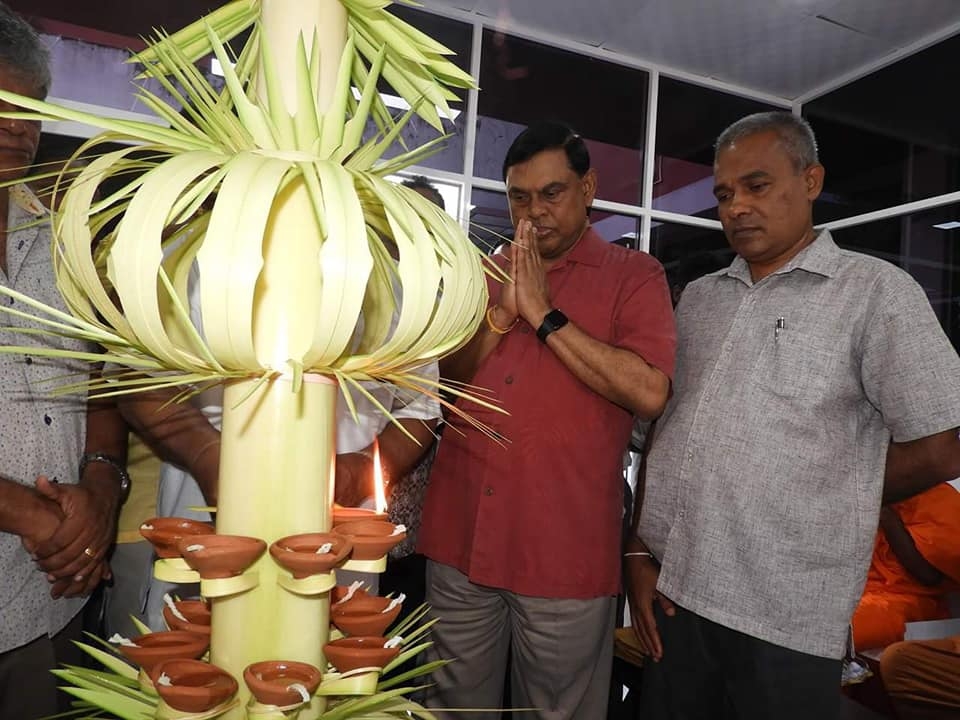
ශ්‍රී ලංකා පොදුජන පෙරමුනේ නිල පුවත් අඩවිය www.slpp.news සහ මාධ්‍ය මධ්‍යස්ථානය පක්ෂයේ නිර්මාතෘ බැසිල් රාජපක්ෂ මහතාගේ සුරතින් අද (05) උදේ විවෘත විය
පක්ෂ කාර්යාල පරිශ්‍රයේ පිහිටවූ මාධ්‍ය මධ්‍යස්ථානය විවෘත කිරීමේ අවස්ථාවට පක්ෂයේ සභාපති මහාචාර්ය ජි එල් පිරිස් මහතා පක්ෂයේ ලේකම් සාගර කාරියවසම් මහතා ලක්ෂ්මන් යාපා අබේවර්ධන ගාමිණී ලොකුගේ එච් එම් චන්ද්‍රසේන මන්ත්‍රීවරුද එක් වුහ

Democracy and General Elections


MEDIA RELEASE

Text of a speech delivered by the Hon. Prime Minister Mahinda Rajapaksa at the Prime Minister’s Office on
Sunday the 2nd December 2018.

Most venerable members of the Maha Sangha, Clergymen of all religions, and my dear friends,

It is only in Sri Lanka that you will find political parties agitating against the holding of a general election that has already been declared. In the gazette notification dated 09 November 2018 issued by the President in accordance with the provisions of our Constitution and the Parliamentary Elections Act, dates had been fixed to call for nominations from the 19th to the 26th November, to hold the poll on the 5th January 2019, and for the new Parliament to meet for the first time on the 17th January. If things had gone accordingly, stability would soon have been restored to this country.

Last year, in November 2017, there was the danger of the local government elections being postponed indefinitely because certain individuals had petitioned the Court of Appeal against the holding of the local government elections citing delimitation issues. However when the Chairman of the Elections Commission declared that he will proceed to hold elections at least in respect of the local government institutions that were not subject to litigation, the then government reluctantly fell in line and agreed to hold elections. With that the peitioners who had gone before the Court of Appeal quietly withdrew their petitions. It was quite clear in that instance, that the court procedure was being misused for a political purpose.

Today, six of the nine provinces in the country do not have functioning provincial councils. The previous government avoided holding elections to the provincial councils for more than one year. We held the Eastern Provincial Council election in 2008 even before the war had ended, immediately after clearing the province of the LTTE. Once the de-mining of the Vanni was complete, we held provincial council elections in the northern province as well in 2013. Today, without any war in the country, both those provinces do not have provincial councils. The previous government put off provincial council elections indefinitely by deliberately refraining from fulfilling the conditions relating to the delimitation of constitutencies in Act No. 17 of 2017 which was rushed through Parliament last year just days before the Sabaragamauwa, North Central and Eastern Provincial Councils were to stand dissolved.

I am placing on record this explanation because the UNP and its affilaited political parties have been making misleading statements from the political platform with a view to deceiving the general public. From the time of our first Parliament, elections were called early whenever necessary to overcome situations of political turbulence. In 1952 when the then Prime Minister D.S.Senanayake died, a division emerged within the UNP regarding the succession. Even though the effective number two in the party was Sir John Kotelawala, the then Governor General Lord Soulbury invited Dudley Senanayake to be the Prime Minister. Within days of swearing in as Prime Minister, Dudley Seneyake summoned a general election and obtained a fresh people’s mandate to contain the divisions within the ruling party.

In 1959 after the assassination of S.W.R.D.Bandaranaike, W. Dahanayake became Prime Minister. When rifts emerged within his Cabinet, he too called a general election. The Governor General’s power to dissolve Parliament was provided for in Article 15 of the 1948 Constitution. Even though Parliamentary conventions like dissolving parliament when the statement of government policy is rejected or when a government loses the budget were not expressly stated in the 1948 Constitution, those conventions applied in Sri Lanka because we closely followed the British system of Parliamentary government at that time.

Provisions relating to the President’s power to dissolve Parliament in our first Republican Constitution of 1972, were found in Article 21. The convention of dissolving Parliament if the statement of government policy was rejected, or a budget was defeated found mention in Article 99 of that Constitution. With regard to the second Republican Constitution of 1978, the President’s power to dissolve Parliament and the convention of dissolving Parliament in the event of a rejection of the statement of government policy or the budget, found mention in Article 70(1). I have no intention of dealing with any matter that is before courts. All these are matters that are being discussed in the media, the social media and in society in general.

The UNP and its allies claim that the 19th Amendment repealed and replaced the old Article 70(1) of the 1978 Constitution, and that according to the new article 70(1), the President cannot dissolve Parliament until the lapse of four and a half years. They claim that an early dissolution will be possible only if Parliament passes a resolution by a two thirds majority requesting the President to dissolve Parliament. All the provisions relating to the dissolution of Parliament in the 1978 Constitution, were found in the old article 70(1) before the 19th Amendment. If those provisions have been abolished, then there are no provisions in the present Constitution to dissolve Parliament in the event of a government losing a vote of no confidence, the vote on the budget or the statement of government policy.

Such restrictions are completely contrary to the Parliamentary tradition. Most countries with a Parliamentary form of government have ceremonial heads of state. Even in such countries, the head of state can exercise his discretion in dissolving Parliament. The British constitutional authority A.V.Dicey has said that if the Crown is of the view that the opinion of the public is different to that of the majority in Parliament, the Crown has the discretion to dissolve Parliament and summon a general election. In 1975, the Governor General of Australia sacked Prime Minister Gough Whitlam and called a general election entirely at his own discretion.

Dr B.R.Ambedkar, the founder of the Indian Constitution has said that the President of India can exercise his discretion when deciding whether to dissolve Parliament. The Governors of the Indian states who are representatives of the President, have exercised that discretion from the very beginning. In 1970, President V.V.Giri exercised his discretion in dissolving Parliament despite the protests of the opposition which had a majority in Parliament. In 1979, President Sanjiva Reddy exercised his discretion and dissolved Parliament due to a situation of near anarchy in the Lower House.

That was in countries with ceremonial heads of state. However the Sri Lankan head of state is an Executive President directly elected by the people. It has been clearly stated in the Supreme Court determination on the 19th Amendment that the power that the sovereign people have vested in the President cannot be removed without a two thirds majority in Parliament and a referendum. Even though it is claimed that the President’s power to dissolve parliament that had been provided for in the old Article 70(1) have been removed, what has actually happened is that those provisions have been taken to another part of the Constitution.

While amending the old Article 70(1), the 19th Amendment also introduced a new subsection (2)(c) to Article 33 of the Constitution. What this new provision says is that ‘in addition to the powers, expressly assigned to the President by the Constitution or other written law, the President shall have the power…to summon, prorogue and dissolve Parliament’. The new provision that has been introduced to the Constitution in the form of article 33(2)(c) has not been made subject to Article 70(1) as amended by the 19th Amendment either.

That is obviously why the 2015 Supreme Court determination on the 19th Amendment did not say that the amendment made to the old article 70(1) had reduced the President’s powers to dissolve Parliament. If the purpose was to reduce the President’s powers, an amendment would have been made only to Article 70(1). Legal experts are of the opinion that the reason why the President’s powers to dissolve parliament which were provided for in the old Article 70(1) have been reintroduced to the Constitution in the form of Article 33(2)(c) is because the President’s power in that regard cannot be taken away except through a referendum.

The 19th Amendment shifted other provisions of the Constitution from one place to another in a similar manner. The old article 42 which declared that the President was responsible to Parliament in the execution of his duties was repealed and the same provision without any change in the wording, was reintroduced as Article 33A by the 19th Amendment. Only the drafters of the 19th Amendment will know why that was done. But the end result is that the President continues to be responsible to Parliament under the 19th Amendment just as he was before the 19th Amendment was introduced. The same applies when a power that the President had under the old Article 70(1) is reintroduced to the Constitution in the form of Article 33(2)(c).

After the 19th Amendment, Parliamentary conventions have been preserved in our Constitution through Article 33(2)(c). If we ignore that Article and accept only Article 70(1) as amended by the 19th Amendment, then we will be faced with a situation where there is absolutely no provision in the Constitution to dissolve Parliament in the event the government is defeated at a vote on the budget, the statement of government policy or a motion of no confidence is passed against a government. Such a situation is completely contrary to Parliamentary tradition. If even the ceremonial heads of state in countries with parliamentary forms of government can dissolve Parliament and call for fresh elections at their discretion when the circumstances so require, how logical is it to say that the President of Sri Lanka who is vested with the executive power of the state on behalf of the sovereign people cannot dissolve Parliament no matter what happens in the country?

How can it be said that the President does not have the power to dissolve Parliament when Article 33(2)(c) was specifically introduced to the Constitution by the 19th Amendment? It took only 56 votes in Parliament to pass into law Act No. 5 of 2018 which put in place a legal framework to hand over our war heroes to foreign courts. How then can one argue that you need 150 votes in Parliament to be able to pave the way for the sovereign people to exercise their franchise? I was recently given a copy of a report published by an inter-governmental organisation called the ‘International Institute for Democracy and Electoral Assistance’. The member states of this organisation include Germany, Australia, Canada, Switzerland and also India and Japan.

According to that report, there are only two countries that require a two thirds majority to dissolve Parliament – Kosovo and Lithuania. However even in those countries the head of state can dissolve parliament if a no confidence motion against the government is adopted or if the statement of government policy is rejected. The only country mentioned therein which has a Parliament that cannot be dissolved under any circumstances until the end of its term, is Norway. However the situation in Norway is very different to ours. The population of Norway is smaller than that or our Western Province. Furthermore, that country is a constitutional monarchy.

Even if a government is defeated in Parliament, it has to continue in office until a new government is appointed by the King. When the King in Council presents the annual budget to Parliament, it will be debated but there is no tradition of defeating budgets in that country. Most of the time, Norway has had minority governments that do not have a majority in Parliament. That is the situation at this moment as well. It should be clear that what works in Norway will not work in Sri Lanka.

The manner in which the French Constitution evolved is also relevant to this discussion. The Constitution that France had before 1940 had made it virtually impossible to dissolve Parliament. This led to chronically unstable governments being formed in France during those years. In 1940, Hitler invaded France. After being liberated from the German occupation, France promulgated a new Constitution in 1946 which relaxed the provisions relating to the dissolution of Parliament and allowed the calling of fresh elections in the event where two no confidence motions are passed against a government within a period of 18 months. However, because even that did not suffice to ensure stable governments, the present Constitution of France which was adopted in 1958 has given the President the power to dissolve Parliament at his discretion.

We must learn from those experiences. Since the dissolution of Parliament and the holding of fresh elections will have implications for the person ordering such actions as well, no head of state will take such a decision lightly. Such a decision will be made only in serious situations. The only way to restore stability to a destablised democracy, will be through a general election. According to our Constitution, sovereignty is vested in the people and not in Parliament. The manner in which the people exercise their sovereignty is through the franchise. I invite all those who respect democracy to give careful thought to these matters.

May the blessings of the Tripple Gem be upon you,
God bless you,
and my best wishes for the future.


Prime Minister Mahinda Rajapaksa

25 December 2018 English